
Payne Released Booking Photo Records
A booking photograph is created during intake and tied to one booking episode. Release ends or transfers custody; it does not turn the image into proof of a conviction. Payne County's public search is designed for people currently in custody, so a photo can disappear from the web when the underlying roster entry drops away. The retained agency record may still exist even when no public gallery remains.
The Oklahoma Open Records Act governs access to kept public records while allowing exemptions and redaction. Section 24A.8 expressly addresses jail-register facts such as commitment and date or manner of discharge, but it does not expressly name the booking photograph as a mandatory register field. Request the image. Let the custodian state whether it can be released and what fee applies.
One person can have more than one image from different custody episodes. A Payne County intake photograph, an older ODOC photograph, and an incident image released by police may show the same person at different times. Match the image to the booking number, arresting agency, date, and case. That context matters when a name is common or an image has been copied without its caption.
A booking photo is not a current-custody result or a court disposition. Verify the identity, booking, release event, and case outcome separately. This site is not a consumer reporting agency, and mugshot data may not be used for any FCRA-covered purpose.
Where Payne Released Mugshots Appear
No single source covers every Payne County arrest. The sheriff record is the direct channel for a county booking. ODOC applies only when the person entered the state corrections system. Registries cover narrow statutory groups, and federal locators generally do not provide public booking photos.
| Channel | Photo availability | How to use it |
|---|---|---|
| Payne sheriff current roster | Sometimes; “no image currently available” may appear | Use only for a current booking, not as a released gallery |
| Sheriff records request | Request the retained image | Identify the person, booking, and date range |
| OK Offender | May show an ODOC photo | Use for people who entered ODOC, not every county arrestee |
| Sex or violent offender registry | May show a qualifying registrant | Use only for the specific registration system |
| Official agency release or local news | Incident-specific | Compare the publication with the court and current agency record |
| Federal locators | Not a public mugshot channel | Use BOP or ICE to answer custody questions, not photo discovery |
Payne Roster Has No Gallery
The Payne County Sheriff inmate search is explicitly current and in custody. It can show booking information, charges, additional detail, and a photo area. It does not advertise a released-only filter, a permanent photo archive, or a 24-hour or 72-hour release gallery. A missing record can mean release, transfer, or an update issue.
No official Payne sheriff inmate-search or recent-release mobile app was documented. City Tele Coin is named for communications and remote visitation, not inmate lookup. Oklahoma VINE has web, app, and phone access for custody events, but it is not a sheriff mugshot gallery. Those distinctions keep a communications product and a notification system from being mislabeled as photo archives.
The sheriff's home page also labels its public block “Recent Bookings.” Booking is an intake event, not a release event. A newly posted photograph can show that the person entered custody, while the current roster must still be checked for whether the agency treats them as held. Once the entry disappears, VINE, the court docket, and the sheriff's discharge record answer the release question. The photo itself does not.
The Payne County last-24-hours release page explains why the current roster cannot be converted into an exit feed.
Request a Payne Booking Photo
The official Payne County Sheriff records form asks for request type, requester contact details, a record description, and a signature. The page says fees are assessed after review and instructs requesters not to prepay. It publishes a $38-per-hour redaction charge in 15-minute increments for report or video work, but no flat booking-photo fee, release-sheet fee, or guaranteed response time.
- Give the full name, aliases if known, date of birth or another disambiguator, booking number, and approximate booking dates.
- Ask for the existing jail register and booking-and-release sheet, plus the retained booking photograph tied to that booking.
- Request the admission and release times, release authority or code, and receiving agency if the exit was a transfer.
- Choose electronic delivery and ask for an itemized fee estimate before work. Do not send payment until the custodian provides instructions.
- If any portion is denied, ask for the specific exemption and any segregable part that can be released.
The county record and court outcome can then be compared through the Payne County released-inmate record path. A photo without those linked facts can be both stale and misleading.
Ask for existing identifiable records, not a new narrative about the person. A precise request can name the jail register, booking-and-release sheet, and booking photograph. It can also ask for the arresting agency, charges at booking, release authority, bond type and disposition, and destination if the event was a transfer. Narrow terms help the Records Division locate the correct file and separate releasable material from any exempt portion.
ODOC Photos Differ From Payne Mugshots
The official ODOC lookup is documented as capable of showing a photograph, identity data, offenses, sentence information, location, and history. It covers people who entered the state corrections system. A person who left Payne County Jail on bond, finished a county-only sentence, or had a charge dismissed without ODOC admission may not have a matching state record.
ODOC's lookup announcement describes the available record detail and photo function.
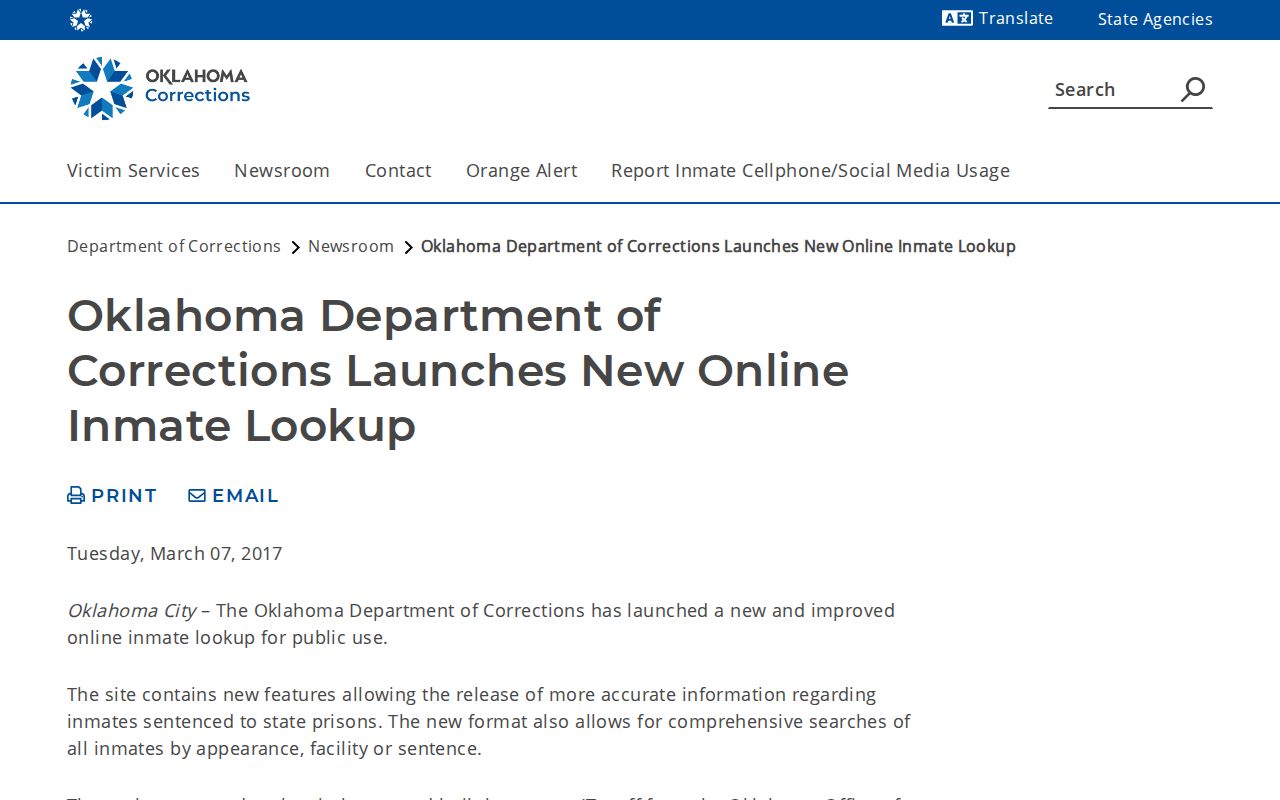
An ODOC photograph is a state corrections image. It is not necessarily the booking photograph created during the Payne County arrest.
A historic photo can remain visible after incarceration ends because the offender record preserves sentence and offense history. Read the status and location fields rather than treating the continued image as proof of custody. Conversely, a person who served only a local jail term may have no ODOC photo at all. The state lookup and Payne sheriff files are different datasets with different coverage.
News and Copied Payne Mugshots
Official sheriff or police releases and local news reports may publish an incident-specific photograph. Publication proves that the image appeared with that story. It does not establish guilt, present custody, release, or the final court result. Compare the date, agency, and named case with the current sheriff record and the Payne County court docket.
Commercial aggregators may retain copied images long after an agency page changes. They can omit later dismissal, acquittal, sentence completion, or expungement information. Treat such a copy only as a clue to the originating agency. No commercial mugshot publisher, data broker, or removal seller is linked or endorsed here.
Registries have another narrow use. The official Oklahoma sex and violent offender registries may display images for people who have a qualifying registration duty. They are not broad Payne County arrest-photo archives and do not give an exact release event.
Federal systems narrow the options further. The BOP locator provides federal custody and release-date context but is not a public mugshot gallery. The U.S. Marshals Service states that federal prisoner photographs and personal histories are restricted from general public release. ICE's locator is designed to locate eligible detainees, not provide booking images. This matters in Payne County because Cimarron Correctional Facility currently serves federal and immigration detention roles rather than ODOC.
For a record error, the OSBI Criminal History Reporting Unit is an official state correction channel for the relevant state history. Its role differs from asking the sheriff to correct a Payne booking photo or asking a court to apply an expungement order.
The correction source helps route an accuracy issue to an official record owner instead of a commercial publisher.
Correcting Payne Mugshot Records
Oklahoma expungement under 22 O.S. §§18 and 19 depends on the statutory category, case outcome, waiting rules, and a court order. It is not automatic after release. A qualifying order can seal records and change what appears online, but the order does not rewrite the historic physical release time. Ask the originating custodian how the order applies to the retained booking photo and public display.
No enacted Oklahoma blanket mugshot-publication ban or anti-pay-to-remove statute was verified. SB 1530 from 2016 and SB 379 from 2025 were proposals, not law. The official Oklahoma statutes portal is the correct place to confirm current law rather than treating a bill version as enacted.
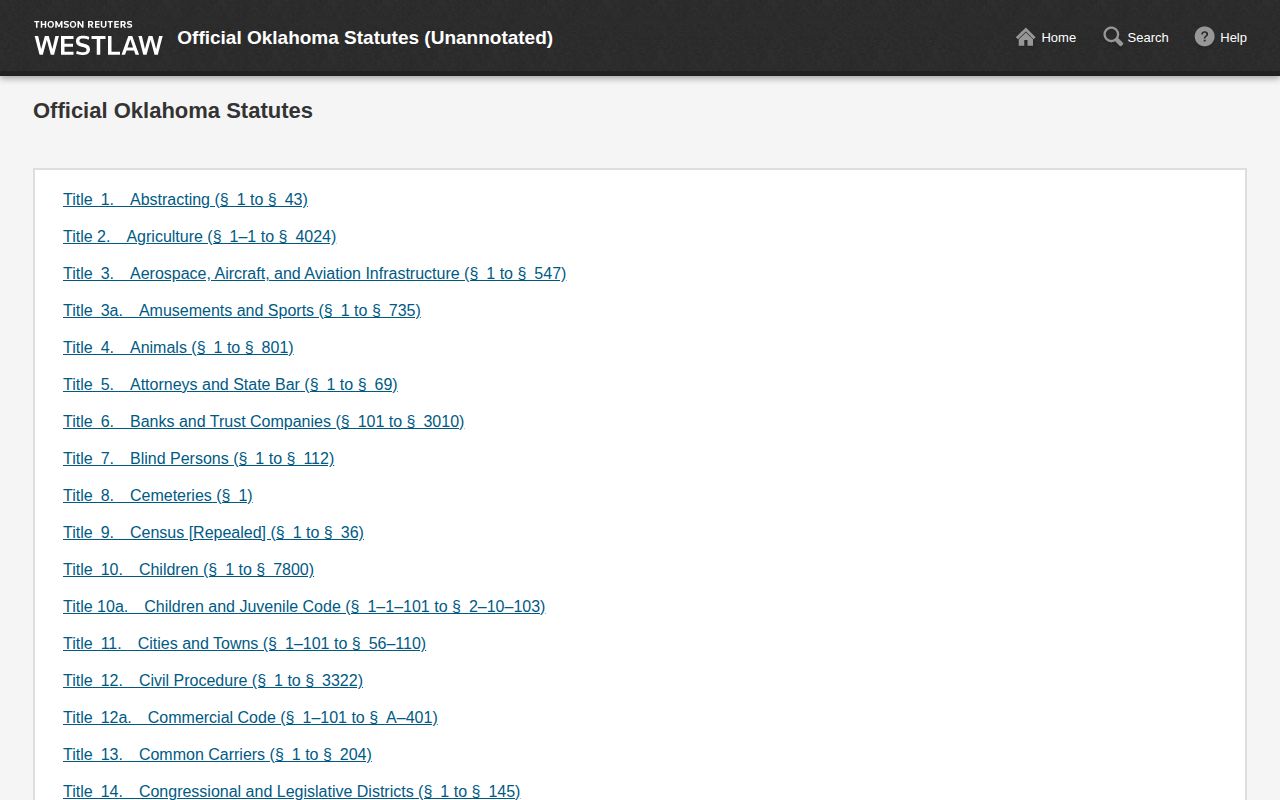
The official statute source supports a careful correction process: obtain the disposition or expungement order, contact the original publisher, and use that custodian's procedure. Independent archives cannot be promised to delete a copy.
Note: The absence of a public image can reflect release, transfer, an unavailable photo, a system change, or a sealed record.
A correction request should identify both the image and the factual error. Include the source page, booking number, publication date, court case, and the order or agency record that supports the requested change. If the image belongs to a sheriff file, contact the sheriff. If the issue concerns an ODOC photo or status, use ODOC. If a publisher copied the photo, send the disposition or sealing order to that publisher as well.
Removal and correction are not the same. A correct image may still be subject to a later sealing order, while an inaccurate identity match may need correction even without expungement. Ask the custodian to explain its process and any statutory basis for keeping material public. Do not pay a removal vendor based on a promise that it controls an independent government or news archive.
Keep copies of the request, order, response, and corrected source page. A later dispute is easier to resolve when each custodian can see the exact record and the action already taken by the court or originating agency.