
Payne Projected Versus Actual Release
A projected release date, often shortened to PRD, is ODOC's estimate based on the sentence calculation then in force. The Oklahoma Pardon and Parole Board uses the same term for that estimate, but it does not calculate the date. A PRD on a parole docket is not a parole order. It also does not prove that a person left a prison, jail, or other custodial setting.
A pretrial Payne County detainee has no sentence-based release date. Bond may be set, changed, posted, or delayed by another hold. A sentenced state prisoner has a calculation, yet earned credits, sentence structure, court changes, and detainers can move the projection. A county-jail sentence uses the judgment, credited jail days, applicable law, holds, and court orders. ODOC class credits must not be applied to a county-only sentence.
Several nearby terms answer different questions. A sentence date marks the court event. A parole eligibility date marks when consideration may become possible under the governing rules. A projected release date estimates the end of confinement under the current calculation. An actual release date records the exit event. Discharge can occur later, after any parole or probation duty ends. Keeping those labels separate prevents a docket planning field from being mistaken for a confirmed Payne County release.
Scheduled is not actual. Confirm release after the event through custody status, VINE, the jail discharge entry, or an ODOC discharge record.
- Projected
- An estimate produced from the current sentence calculation.
- Parole eligible
- Potentially able to be considered for parole under the governing law, not approved or released.
- Released
- The person left one custodial setting, possibly into another authority's custody.
- Discharged
- The applicable sentence or supervision obligation ended.
Find a Payne Inmate Release Date
The correct route depends on where the sentence is being served. The OK Offender application covers people in the ODOC system. A person who bonded out, completed a Payne County jail sentence, or never entered state corrections may not appear there. ODOC's public interface can expose identity, DOC number, status, location, sentence data, and a projected-date field when available, but exact fields vary by record.
- Confirm the person's full name, date of birth, case number, booking number, or DOC number. Compare several identifiers before accepting a match.
- Decide whether the person is pretrial, serving a Payne County jail term, or serving an ODOC sentence. A roster entry alone may not settle that question.
- For ODOC custody, open the full offender record and capture the exact status, facility, sentence, and projected-date labels shown.
- For a county term, read the Payne County judgment in OSCN and request the jail's existing sentence or release calculation.
- Check for other cases, warrants, detainers, consecutive terms, and later orders. These can prevent release on the date suggested by one case.
- After the expected date passes, confirm the event rather than repeating the estimate. Use the custody history, VINE, or discharge record.
The broader Payne County release search explains how county, state, federal, and immigration paths separate after a roster disappearance.
Public ODOC fields are not guaranteed to appear in every record. The agency says its lookup contains abbreviated information and is not an exact explanation of the offense, sentence, or time to serve. During the 2026 research review, the application also warned about issues following a data-source change. If an expected date or sentence field looks wrong, preserve the displayed labels and access time, then request the underlying record. Do not invent a date from the sentence length.
Oklahoma Credits Shape Payne Dates
ODOC's Sentence Administration policy, effective April 7, 2026, implements 57 O.S. §138. Current monthly rates are zero days at Level 1, 22 at Level 2, 33 at Level 3, and 44 at Level 4. Enhanced Level 3 can earn 45 days, and enhanced Level 4 can earn 60. Enhanced placement has statutory and offense-history restrictions.
The calculation starts with the controlling sentence and effective dates. Sentence staff include court-awarded jail credit, subtract actual days served and lawful earned or achievement credits, and account for concurrent or consecutive terms. A unit treatment team or adjustment review committee reviews classification at least every four months. Misconduct can remove credit. Restoration is discretionary under stated criteria, while qualifying achievements can also affect the total.
Concurrent sentences generally run at the same time to the extent ordered, while consecutive sentences run one after another. A corrected judgment can change which structure controls. Post-sentence jail time attributable to an ODOC term is credited under the governing framework, but the sentencing documents must support it. Restricted-credit rules can limit how credits apply. These inputs make a hand calculation unreliable, even when the sentence length and current class level seem clear.
The ODOC Section 06 policy index places the sentence policies in context.
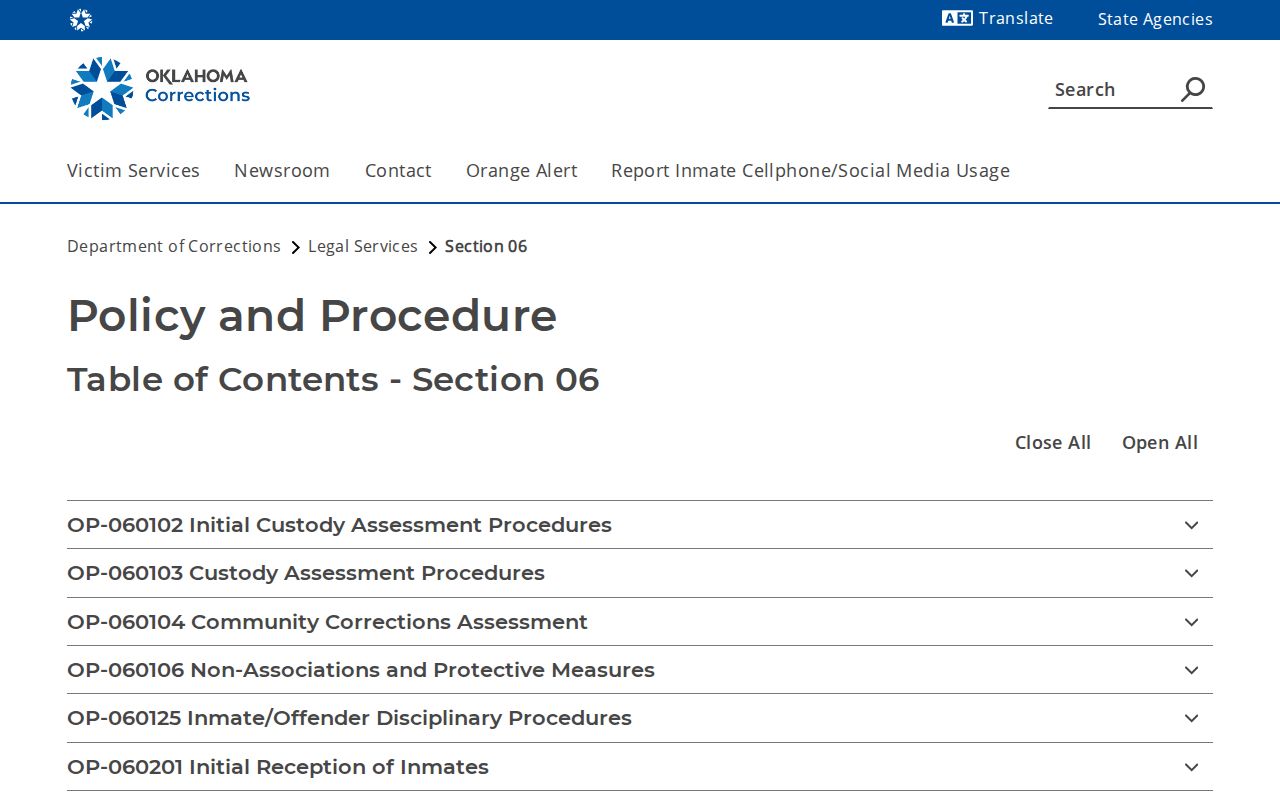
The policy index helps locate the current source; only sentence staff can apply the rules to a specific ODOC record.
Payne Sentences and the 85% Rule
21 O.S. §13.1 applies to an enumerated group of serious offenses. It is not a universal Oklahoma truth-in-sentencing rule. For a covered conviction, at least 85 percent of the prison term must be served before parole consideration, and credits cannot reduce the term below that floor.
The exact offense and controlling date matter. Casual use of the word violent does not place a conviction under the statute. Read the current Title 21 text and the judgment instead of copying an old offense list. Parole eligibility under 57 O.S. §332.7 also varies by offense date and category, which is why a simple fraction is not a reliable Payne County release forecast.
The 85-percent floor concerns the imprisonment imposed for a listed conviction and parole consideration. It should not be turned into a universal release calculator. Credits may still matter within the lawful framework without reducing a covered term below its statutory floor. When multiple counts have different rules, the controlling sentence record must reconcile them. The current statute and offense date take priority over an old summary.
Why Payne Release Dates Move
A changed date does not always mean one source was false. A projection is recalculated when the inputs change or staff correct the record. Read the latest status beside the latest date and obtain the calculation record when a large change cannot be explained.
| Factor | Possible effect | Best confirming record |
|---|---|---|
| Jail-time credit | Added or corrected credit can move the date earlier | Judgment and sentence calculation |
| Consecutive or concurrent terms | Changes how multiple terms combine | Court orders and ODOC sentence record |
| Credit level or achievement | Changes the rate of earned credit | ODOC monthly calculation and policy |
| Misconduct loss or restoration | Can move the estimate later or, after restoration, earlier | ODOC institutional record |
| Appeal or later court action | Can alter the controlling term | Filed court order |
| Detainer or hold | Can prevent community release after one term ends | Discharge destination and holding agency record |
| Parole action | May change the route or timing, subject to conditions | Validated PPB result and ODOC status |
Payne County publishes no local good-time table for a county-only sentence. Ask the detention center for its existing calculation or the court or counsel to clarify the judgment. Do not import state class levels into a county term.
A county record request should identify the person, booking number, case number, sentence dates, and the exact existing calculation sought. Ask for credited jail days, the date and manner of discharge when the event has occurred, and any receiving agency if the exit was a transfer. The sheriff's records page says fees are provided after review and requesters should not prepay. It does not publish a flat release-sheet fee or guaranteed response time.
For ODOC records, include the DOC number and date range. The agency lists a discharge-only email and a Closed Records telephone channel, and it provides an authorization form for incarceration or supervision records when nonpublic detail is requested. A court order should come from the Payne County Court Clerk, not from asking jail staff to interpret the judgment. Each custodian answers for its own record.
Confirm a Payne Release Event
ODOC's Offender Info page says the precise inmate release date is generally confidential without legitimate need. The incarcerated person receives a days-remaining figure monthly and can ask the facility records officer or case manager about it. A date shared by that person remains tentative because credit level, misconduct, achievements, and other sentence inputs can change.
The official page shows why a public estimate must be framed with care.
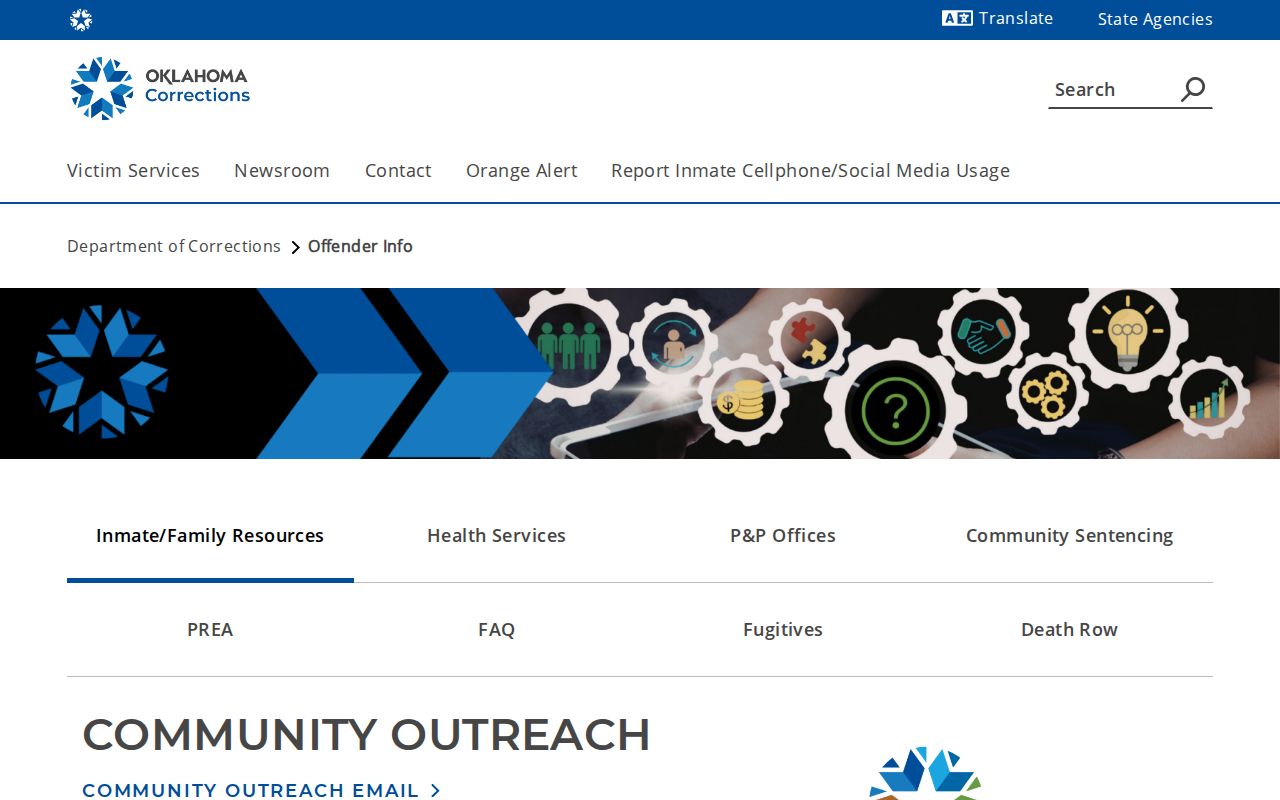
The ODOC guidance pairs confidentiality with the tentative nature of any date that can be disclosed.
For event alerts, the Payne County VINELink Release Check can report a participating agency's release or transfer update. Read the event type carefully. A transfer closes one custody episode but does not put the person in the community. For county releases, request the sheriff's date and manner of discharge. For ODOC, confirm through later status history or an authorized discharge record.
When sources conflict, compare what each system is designed to show. The court explains legal authority, ODOC owns the state sentence calculation, the sheriff records the county discharge, and VINE passes along agency events. A court order entered today may precede physical processing. A VINE release notice may close one booking while a warrant sends the person elsewhere. A past PRD beside a current incarcerated status is not proof that release occurred.
A favorable Pardon and Parole Board result adds another stage, not a door time. Board votes are validated after the meeting ends, and some outcomes require gubernatorial action. Conditions, detainers, and sentence-administration work can remain after a favorable vote. Check the final posted result, then compare ODOC status and the assigned supervision office. “On docket,” “recommended,” “granted,” and “released on parole” describe sequentially different points.
Federal and immigration dates require different systems. A BOP locator release date addresses federal prison custody, while an ICE locator result concerns immigration detention. Neither establishes the release date for Payne County Jail. Cimarron Correctional Facility in Cushing currently serves federal and ICE roles, not an ODOC state-prison population. Determine the controlling authority before applying an Oklahoma earned-credit rule or reading a county docket as the complete custody record.
Note: A favorable parole outcome, past projected date, or missing roster result is not a substitute for a recorded release event.